Unlocking inner peace through mindful meditation during yoga is a powerful practice. This guide provides a structured approach to integrating meditation into your yoga routine, using seven key mindful rules. Discover how to cultivate a deeper connection with your body and mind through focused attention and breath awareness, transforming your yoga sessions into moments of profound self-discovery.
Each mindful rule is explained with clear examples of application during specific yoga poses. This detailed approach, supported by visual aids and breathing techniques, will empower you to navigate the complexities of meditation with ease and achieve a deeper connection with your practice.
Introduction to Mindful Meditation During Yoga
Mindful meditation, a practice deeply rooted in Eastern traditions, involves focusing on the present moment without judgment. It cultivates awareness of thoughts, feelings, and sensations as they arise, allowing practitioners to observe them without getting carried away by them. Integrating mindful meditation into a yoga practice enhances the overall experience, fostering a deeper connection with the body and mind.Integrating meditation into yoga practice enhances physical and mental well-being.
The mindful awareness cultivated during meditation translates into a more intentional and present approach to each yoga pose. This conscious engagement deepens the physical benefits of yoga while nurturing mental clarity and emotional balance. A mindful approach to yoga poses allows practitioners to connect with their bodies and minds on a deeper level. This connection promotes a sense of self-awareness, enabling a more nuanced and profound experience of the practice.
Benefits of Mindful Meditation in Yoga
Mindful meditation significantly enhances the yoga experience by fostering a deeper connection between the mind and body. It cultivates a more present and intentional approach to each pose, leading to greater physical awareness and stability. This conscious engagement can also contribute to improved focus and emotional regulation, promoting overall well-being. This conscious approach to movement and breath can create a sense of peace and harmony within.
Importance of a Mindful Approach to Yoga Poses
A mindful approach to yoga poses is essential for maximizing the practice’s benefits. This mindful awareness allows practitioners to connect with their bodies’ subtle sensations, enabling them to adjust poses for optimal alignment and prevent injuries. It also fosters a deeper appreciation for the physical and mental effort involved in each movement, leading to a more profound understanding of one’s body and its capabilities.
Practicing yoga with awareness enhances physical alignment, minimizes the risk of injury, and promotes a greater understanding of body awareness.
Overview of 7 Mindful Rules for Meditation During Yoga
These seven mindful rules provide a framework for integrating mindful meditation into your yoga practice, guiding you toward a more profound and enriching experience. By observing these rules, practitioners can cultivate greater presence, focus, and a stronger connection with their bodies and minds.
| Rule Number | Rule Description | Yoga Pose Example | Explanation of Mindfulness Application |
|---|---|---|---|
| 1 | Mindful Breath Awareness | Mountain Pose (Tadasana) | Pay close attention to the sensation of each breath as it enters and leaves the body. Notice the rise and fall of the chest or abdomen. This fosters a sense of grounding and presence. |
| 2 | Body Scan Awareness | Warrior II Pose (Virabhadrasana II) | Notice the sensations in different parts of your body, such as the weight of your feet on the floor, the stretch in your legs, and the engagement of your core. This cultivates a deeper awareness of the body in space. |
| 3 | Thought Observation | Tree Pose (Vrksasana) | Acknowledge thoughts as they arise without judgment. Simply observe them as they pass through your mind, like clouds drifting across the sky. This fosters mental clarity and non-reactivity. |
| 4 | Sensory Awareness | Downward-Facing Dog (Adho Mukha Svanasana) | Notice the sensations of the pose—the stretch in the hamstrings, the engagement of the shoulders, and the grounding of the hands on the floor. This helps to create a stronger connection with the physical body. |
| 5 | Emotional Awareness | Child’s Pose (Balasana) | Acknowledge any emotions that may arise without getting carried away by them. Allow yourself to feel the emotion without judgment, observing it as a passing sensation. This helps to develop emotional regulation. |
| 6 | Mindful Movement | Cobra Pose (Bhujangasana) | Pay close attention to the movement of your body as you transition between poses. Notice the subtle shifts in energy and alignment. This cultivates a sense of intentionality in movement. |
| 7 | Non-Judgmental Observation | Any pose | Observe your experience without judgment. Accept thoughts, feelings, and sensations as they are without trying to change or control them. This promotes a sense of peace and acceptance. |
Understanding the 7 Mindful Rules
Embarking on a mindful meditation journey during yoga involves cultivating a heightened awareness of the present moment. These seven mindful rules serve as guiding principles, helping to cultivate a deeper connection with your body and mind. They offer a framework for a more enriching and effective practice.Applying these rules in your yoga practice fosters a deeper understanding of your body’s responses and emotions.
By consistently practicing mindfulness, you can cultivate inner peace and resilience, allowing you to approach challenges with greater clarity and composure.
Detailed Explanation of the 7 Mindful Rules
These seven mindful rules provide a structured approach to cultivate mindfulness during yoga. Each rule plays a crucial role in guiding your focus and deepening your connection with the present moment.
- Rule 1: Body Awareness: This rule emphasizes the importance of paying attention to physical sensations without judgment. It involves noticing the subtle shifts in your body – the gentle pressure of your breath, the warmth of the sun on your skin, the subtle tension in your muscles. This awareness is essential for grounding yourself in the present moment. For example, during a seated meditation posture, observe the contact points of your body with the floor.
Feel the weight in your legs, the subtle rise and fall of your chest with each breath.
- Rule 2: Breath Awareness: Focusing on your breath is fundamental to meditation. Notice the sensation of the air entering and leaving your body. Observe the natural rhythm of your breath without trying to control it. This anchors you in the present. During a warrior pose, acknowledge the deep breaths filling your lungs, and observe the gentle rise and fall of your abdomen.
- Rule 3: Sensory Awareness: Engage all your senses during your yoga practice. Notice the sounds around you, the textures of the fabrics, the aromas of the room, and the taste of your water. This multifaceted awareness expands your connection with your surroundings. During a tree pose, feel the connection of your feet with the ground, and observe the gentle breeze rustling through the trees outside the window.
- Rule 4: Emotional Awareness: Recognize and acknowledge your emotions without judgment. Notice feelings of joy, sadness, anger, or peace. Observe them as they arise and pass without getting entangled in them. During a restorative pose, acknowledge any feelings of relaxation or tension, and observe how your body reacts.
- Rule 5: Thought Awareness: Become aware of your thoughts as they arise and pass without getting carried away by them. Acknowledge them as mental events without engaging in judgment or trying to change them. During a sun salutation sequence, notice the thoughts that might pop up during the flow. Acknowledge them and return your attention to your breath.
- Rule 6: Non-Judgmental Observation: Refrain from evaluating or judging your thoughts, feelings, or sensations. Approach everything with a sense of curiosity and acceptance. During a shoulder stand, notice the sensations without labeling them as good or bad.
- Rule 7: Anchoring in the Present: Regularly bring your attention back to your breath, your body, or other anchors of the present moment whenever your mind wanders. This is a constant process of returning to the here and now. During a seated meditation, gently guide your attention back to the sensation of your breath when your mind drifts to thoughts of the future.
Maintaining Awareness During Meditation
Maintaining consistent awareness throughout your meditation practice is crucial. This requires continuous effort to bring your attention back to the present moment whenever it wanders. Regular practice strengthens your ability to stay focused and develop a greater sense of inner peace. A wandering mind is a common challenge during meditation, but consistent effort and practice help develop focus and reduce mental distractions.
Comparison of Mindful Rules
| Mindful Rule | Significance | Interrelation with Other Rules |
|---|---|---|
| Body Awareness | Grounds you in the present. | Complementary to breath awareness, sensory awareness, and emotional awareness. |
| Breath Awareness | Anchors you in the present. | Crucial for emotional regulation and managing thoughts. |
| Sensory Awareness | Expands your connection to the environment. | Provides context and anchors to body and breath awareness. |
| Emotional Awareness | Promotes acceptance and understanding. | Essential for reducing emotional reactivity and improving self-awareness. |
| Thought Awareness | Develops detachment from thoughts. | Contributes to a broader understanding of mental processes. |
| Non-Judgmental Observation | Cultivates acceptance and reduces stress. | Facilitates awareness of other rules and thoughts. |
| Anchoring in the Present | Maintains focus and reduces distractions. | Interconnected with all other rules for maintaining awareness. |
Challenges and Solutions
A common challenge in applying these rules is the tendency for the mind to wander. A solution involves practicing gentle redirection of your attention back to your breath, body sensations, or other anchors of the present. Another potential challenge is maintaining non-judgmental observation. Solutions include reminding yourself to observe without evaluation and focusing on accepting your thoughts and feelings as they are.
Practical Application of Rules During Yoga Poses

Applying the seven mindful rules during yoga poses transforms the practice from a physical exercise into a profound meditative experience. By integrating these rules into your posture and breathwork, you cultivate a deeper connection with your body and mind, fostering inner peace and well-being. This section will demonstrate how to integrate each rule into specific yoga poses, highlighting mindful breathing techniques for enhanced focus and awareness.
Applying Breath Awareness in Different Yoga Poses
Breath awareness is fundamental to mindful yoga. It acts as an anchor, bringing your attention back to the present moment whenever your mind wanders. Incorporating mindful breathing techniques into each pose enhances your experience and deepens the connection between your body and mind. Various techniques, such as box breathing, alternate nostril breathing, and conscious inhalation/exhalation, can be adapted to different poses.
Examples of Mindful Breathing Techniques
Different mindful breathing techniques can be employed to support various yoga poses and the seven mindful rules. Box breathing, a rhythmic pattern of equal inhalation, hold, exhalation, and hold, promotes calmness and focus. Alternate nostril breathing, where you inhale through one nostril and exhale through the other, balances the energy channels and enhances concentration. Conscious inhalation and exhalation, focusing on the sensation of the breath entering and leaving your body, fosters present moment awareness.
These techniques are adaptable to different yoga poses and can be tailored to individual needs.
Yoga Poses for Mindful Meditation
This section presents a selection of yoga poses suitable for mindful meditation, categorized by the mindful rules they best exemplify. These poses, when practiced with mindful awareness, can provide a rich platform for exploring the seven rules.
Table of Yoga Poses, Rule Application, and Breathwork
| Yoga Pose | Rule Application Example | Breathwork |
|---|---|---|
| Mountain Pose (Tadasana) | Standing tall, grounding your feet firmly, observing the natural alignment of your body, focusing on the sensations in your feet, legs, and spine. Mindfully connecting to the present moment. | Slow, deep breaths. Feel the expansion of your chest and abdomen with each inhale, and the contraction with each exhale. Maintain a steady rhythm. |
| Warrior II Pose (Virabhadrasana II) | Maintain a stable posture, acknowledging the sensations in your body, balancing the weight evenly, feeling the stretch and engagement of muscles, observing the steadiness of your gaze. | Inhale as you extend your arms and exhale as you bend your front knee. Feel the breath filling your lungs as you reach for the sky and the release of breath as you connect with the ground. |
| Tree Pose (Vrksasana) | Focus on stability and balance, acknowledging the effort required to maintain the pose, feeling the subtle shifts in your body, observing the connection between mind and body. | Steady breaths, maintaining a consistent rhythm. Notice the sensations in your balancing leg and grounded foot. |
| Child’s Pose (Balasana) | Release tension in the body, allowing yourself to rest, feeling the stretch in your hips, thighs, and back. Mindfully releasing any stress or anxiety. | Deep, slow breaths. Feel the expansion of your chest and abdomen with each inhale, and the relaxation with each exhale. Let go of any tension in your body. |
| Cobra Pose (Bhujangasana) | Feel the stretch in your spine, acknowledging the effort and the release. Maintain a steady posture and focus on the movement. | Inhale as you lift your chest, and exhale as you lower it. Feel the breath flowing through your body. |
Deepening the Meditation Experience
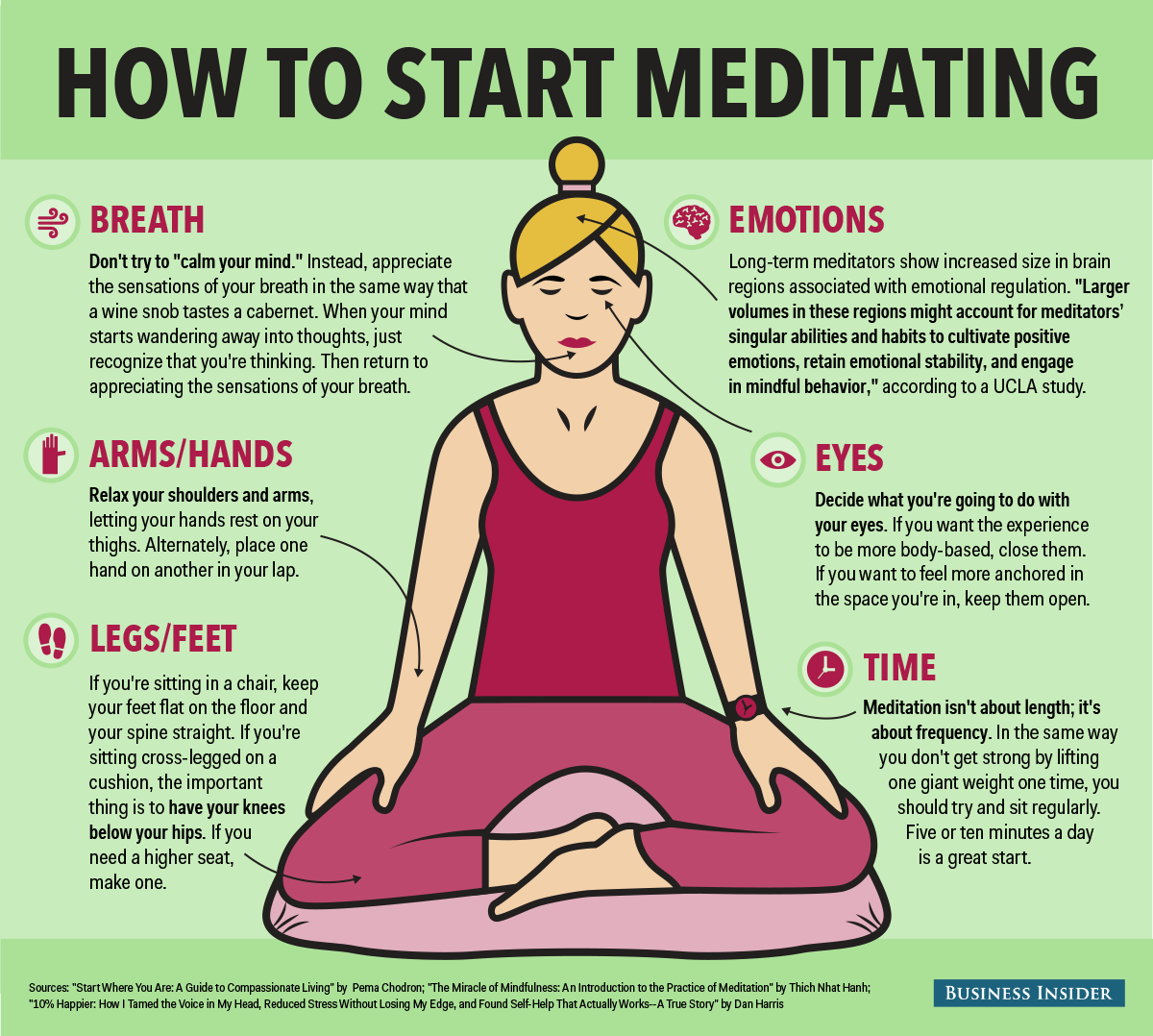
Embarking on a mindful meditation journey is a process of continuous refinement. Beyond the foundational principles, techniques for enhancing focus, managing distractions, and integrating mindfulness into daily life are crucial for a deeper and more meaningful experience. This exploration will delve into strategies for bolstering your meditation practice, leading to greater clarity and well-being.This section explores advanced techniques for enhancing focus and concentration, the role of body awareness, visualization, distraction management, and the integration of mindful awareness into daily life.
Mastering these techniques allows you to cultivate a more profound and enriching meditation practice.
Techniques for Enhanced Focus and Concentration
Developing sustained focus is a key element in deepening your meditation experience. Regular practice strengthens the ability to direct attention and maintain concentration, regardless of distractions. Strategies such as focused attention on the breath, using a mantra, or engaging in mindful movement can greatly aid in this process. Mindfulness exercises, like observing thoughts without judgment, can help detach from the narrative of the mind and anchor focus in the present moment.
The Role of Body Awareness in Meditation
Body awareness is integral to mindful meditation. By paying close attention to bodily sensations—tension, relaxation, warmth, or coolness—you can cultivate a stronger connection to the present moment. This awareness extends beyond physical sensations to encompass subtle shifts in energy and emotional states. This embodied awareness provides a grounded anchor in your practice. Regular engagement with body scans can foster a greater understanding of your physical self, promoting both physical and emotional well-being.
Visualization Techniques in Yoga and Meditation
Visualization techniques are powerful tools for deepening the meditative state. By creating mental images, you can evoke a sense of peace, calm, or clarity. In yoga, visualizing the alignment of poses can enhance stability and balance. In meditation, visualization can lead to emotional regulation and a profound sense of connection to oneself and the universe. For instance, visualizing a calming landscape or a peaceful sanctuary can soothe the mind and foster a sense of serenity.
Strategies for Managing Distractions During Meditation
Distractions are inevitable during meditation. Acknowledging their presence without judgment is a critical step in managing them. Developing a non-reactive attitude towards thoughts, sounds, or sensations that arise is essential. Techniques such as gently redirecting attention back to the breath or chosen focal point, or consciously noting the distraction and returning to the present moment, can be invaluable.
Recognizing patterns in your distractions can help you develop strategies to mitigate their impact.
Integrating Mindful Awareness into Everyday Activities
Cultivating mindful awareness extends beyond the meditation cushion. Applying mindful principles to daily activities—eating, walking, interacting with others—enhances your overall quality of life. Paying attention to the sensations of eating, savoring the flavors and textures, can transform a routine activity into a mindful experience. Similarly, walking with awareness of each step, the feeling of the ground beneath your feet, and the surroundings, transforms a simple act into a moment of presence.
Troubleshooting Common Challenges
Mindful meditation, while offering numerous benefits, can present various challenges. Understanding these obstacles and developing strategies to address them is crucial for maintaining a consistent and rewarding practice. This section provides practical solutions to common difficulties, enabling practitioners of all levels to navigate these hurdles and deepen their connection with mindful awareness.
Common Challenges During Meditation
Maintaining focus and concentration is often a significant hurdle for beginners. Distractions, both internal (such as racing thoughts) and external (such as environmental noises), can disrupt the meditative state. Furthermore, patience and persistence are vital, as the initial experience may not always align with the desired outcome. A lack of clear guidance and a lack of understanding of proper techniques also can lead to frustration.
Practical Solutions for Overcoming Challenges
Addressing these challenges requires adaptable techniques and a supportive approach. Building a consistent routine and creating a dedicated meditation space can minimize external distractions. Active listening to internal cues and thoughts, without judgment, is essential to develop awareness and manage racing thoughts.
Adjusting Techniques for Different Levels
The approach to meditation should be adjusted based on the individual’s experience level. Beginners should start with shorter sessions, focusing on a single aspect of mindfulness, such as the breath or body sensations. As experience grows, they can gradually increase session duration and explore more complex techniques, such as focusing on emotions or visualizing.
Maintaining Motivation and Consistency
Consistency is key to experiencing the full benefits of mindful meditation. Setting realistic goals, breaking down the practice into smaller, manageable steps, and tracking progress can help maintain motivation. Finding a supportive community or meditation buddy can provide encouragement and accountability.
Table of Common Challenges and Solutions
| Challenge | Solution |
|---|---|
| Difficulty focusing | Start with shorter sessions. Focus on a single point, such as the breath. Create a dedicated, quiet space. Practice regularly. |
| Racing thoughts | Acknowledge thoughts without judgment. Gently redirect attention back to the chosen focus point, such as the breath. Consider mindfulness exercises throughout the day to train focus. |
| Lack of patience | Recognize that progress takes time. Celebrate small victories. Focus on the present moment and the process of meditation itself. |
| Distractions | Create a dedicated meditation space. Minimize external noise. Use calming music or sounds. Employ techniques to ground oneself, such as grounding exercises. |
| Lack of motivation | Set realistic goals. Break down sessions into shorter periods. Track progress. Join a meditation group or find a meditation buddy. Reward yourself for consistent practice. |
| Difficulty understanding proper technique | Seek guidance from a qualified instructor. Explore various meditation resources, such as apps, books, and online tutorials. Focus on proper alignment and posture in yoga. |
Maintaining Consistency and Progression
Cultivating a consistent meditation practice is a journey, not a destination. Regularity, coupled with mindful adaptation, is key to experiencing the profound benefits of meditation. This section provides practical strategies for maintaining a consistent practice and progressing along your meditation path.Sustaining a consistent practice requires intentionality and a flexible approach. It’s not about rigid schedules, but rather about building sustainable habits that fit within your lifestyle.
Adjusting techniques to accommodate your daily rhythm ensures that meditation becomes an integral part of your life, not an added burden.
Practical Tips for Maintaining a Regular Practice
Consistency is built on small, manageable steps. Scheduling short, regular meditation sessions is more effective than infrequent, extended ones. Aim for daily practice, even if it’s just for 5-10 minutes. The key is consistency, not intensity. Integrating meditation into your daily routine, like after waking up or before bed, can help establish a strong habit.
Consider using meditation apps or reminders to help you stay on track. Don’t be discouraged by missed sessions; simply resume your practice the next day.
Adapting Meditation Techniques to Different Schedules and Lifestyles
Meditation techniques can be adapted to accommodate diverse schedules and lifestyles. If your schedule is packed, consider shorter, more frequent sessions. If you prefer guided meditations, explore various styles, lengths, and instructors to find what resonates with you. Mindful movement practices like yoga can also be excellent complements to seated meditation, especially for individuals who find stillness challenging.
The goal is to find a technique and schedule that feels comfortable and sustainable.
Resources for Further Learning
Numerous resources can deepen your understanding of mindfulness and meditation. Books, websites, and online courses provide valuable insights into different meditation techniques and philosophies. Look for resources that align with your learning style and interests. Consider joining a local meditation group or class for community support and shared experiences. Explore online communities and forums for discussions and support.
Finding a meditation teacher or mentor can also provide personalized guidance.
Setting Personal Goals for Meditation Progress
Setting personal goals helps you stay motivated and track your progress. Begin with achievable goals, such as meditating for a specific duration daily or incorporating a particular technique into your routine. As you progress, you can adjust your goals to challenge yourself in new ways. Focus on personal growth, not comparison with others. Be patient and kind to yourself.
Celebrate your progress, no matter how small.
Tracking Personal Meditation Experiences and Growth
Tracking your meditation experiences and growth provides valuable insights into your journey. Use a journal or a meditation app to record your sessions, noting the time, technique, and any significant experiences or feelings. Pay attention to how your meditation practice impacts your daily life. Notice improvements in focus, emotional regulation, or stress management. Reflect on how your meditation practice has evolved over time.
Use this reflection to identify areas for growth and refinement.
Illustrations and Visual Aids
Enhancing your mindful meditation practice through yoga involves a rich tapestry of sensory experiences. Visual aids, including specific poses, breathing techniques, and visualizations, serve as powerful tools to deepen your connection with the present moment. These tools help to anchor your focus, regulate your breath, and cultivate a deeper sense of self-awareness.Visual aids are crucial for anchoring attention and building a stronger connection between body and mind during meditation.
Using tangible images and techniques provides a framework for navigating the often-abstract nature of mindful meditation. This section provides detailed descriptions of these visual aids, offering practical guidance for integrating them into your yoga practice.
Mindful Poses for Illustration
These poses, when held mindfully, can cultivate a sense of stability and grounding, which are beneficial for meditation. They can be used as focal points for attention during meditation, allowing you to observe sensations without judgment.
- Mountain Pose (Tadasana): Stand with feet together, grounding your feet firmly into the earth. Feel the connection between your feet and the ground. Lengthen your spine, drawing your shoulders down and away from your ears. Allow your arms to hang naturally at your sides. Notice the sensations in your feet, legs, and torso.
Maintain a gentle awareness of your breath, noticing its rhythm and flow. This pose encourages a feeling of stability and presence.
- Tree Pose (Vrksasana): Begin standing in Tadasana. Bring the sole of one foot to the inner thigh of the opposite leg, keeping the knee aligned with the ankle. Ground through your standing foot. Lengthen your spine, drawing your shoulders down. Bring your hands to prayer position at your heart center or extend them overhead.
Maintain a calm and steady breath. Focus on the stability of the pose and the sensations in your body. This pose promotes balance and focus.
- Child’s Pose (Balasana): Kneel on the floor with your big toes touching. Sit back on your heels, and fold forward, resting your forehead on the mat. Extend your arms out in front of you, palms facing down. Allow your body to relax completely, releasing any tension in your shoulders, neck, and hips. Feel the stretch in your lower back and hips.
Notice the natural rhythm of your breath. This pose encourages relaxation and release.
Breathing Techniques for Meditation
Specific breathing techniques are powerful tools for regulating the mind and body. By focusing on the breath, we can cultivate a sense of calm and awareness.
- Diaphragmatic Breathing: Place one hand on your chest and the other on your abdomen. Inhale deeply, feeling your abdomen expand. Your chest should move minimally. Exhale slowly, allowing your abdomen to contract. Continue this rhythmic pattern, focusing on the sensations of your breath.
This technique promotes relaxation and reduces stress.
- Alternate Nostril Breathing (Nadi Shodhana): Close your right nostril with your right thumb. Inhale slowly through your left nostril. Close your left nostril with your ring finger and middle finger. Exhale slowly through your right nostril. Continue this pattern, maintaining a slow and steady rhythm.
This technique balances the energies of the body and mind.
Visualization Exercises for Meditation
Visualization can be a powerful tool for cultivating a sense of peace and clarity. Imagine yourself in a tranquil setting, or visualize a positive affirmation to reinforce your intentions.
- Visualization of a Peaceful Landscape: Close your eyes and imagine a serene landscape, such as a meadow, forest, or beach. Focus on the details of the scene – the colors, sounds, and textures. Allow yourself to immerse in the tranquility of the setting. This technique can help calm the mind and reduce stress.
- Visualization of Positive Affirmations: Choose a positive affirmation, such as “I am strong,” or “I am capable.” Visualize yourself embodying this affirmation. See yourself as confident, capable, and resourceful. Repeat the affirmation mentally, visualizing yourself living in alignment with the affirmation. This technique strengthens positive self-perception and reduces self-doubt.
Descriptive Imagery for Mindful Rules
Each of the seven mindful rules can be visualized to emphasize their importance. Imagine the rules as guiding lights, illuminating your path toward a more mindful and fulfilling life.
- Non-Judgment: Imagine a calm, clear stream flowing freely. Any leaves or debris that drift into the stream are simply observed, without judgment, and carried away. Similarly, when thoughts arise, simply observe them without judgment.
- Acceptance: Imagine a flower fully blossoming in the sun. It accepts its imperfections and embraces the beauty of its present state. Likewise, accept yourself and your circumstances as they are, without resistance.
Table of Visual Aids and Meditation Techniques
| Visual Aid Description | Corresponding Meditation Technique |
|---|---|
| Mountain Pose (Tadasana) | Grounding and stability |
| Tree Pose (Vrksasana) | Balance and focus |
| Child’s Pose (Balasana) | Relaxation and release |
| Diaphragmatic Breathing | Relaxation and stress reduction |
| Alternate Nostril Breathing (Nadi Shodhana) | Energy balance and mental clarity |
| Visualization of a Peaceful Landscape | Stress reduction and mindfulness |
| Visualization of Positive Affirmations | Self-improvement and positive self-perception |
Conclusive Thoughts
This comprehensive guide provides a roadmap to mindful meditation during yoga, equipping you with practical tools and techniques to enhance your practice. By understanding and applying the seven mindful rules, you can cultivate a deeper sense of presence, focus, and inner peace. The practical examples and detailed explanations will enable you to seamlessly integrate these principles into your daily life, creating a consistent and enriching practice.