Unlock the profound benefits of meditation within your yoga practice. This comprehensive guide unveils 25 proven steps to seamlessly integrate meditation into your yoga routine, fostering a deeper connection with your body and mind. Discover how to find inner peace and tranquility through mindful movement and focused breathing.
This guide will delve into the essential principles of meditation within a yoga context, providing practical steps to enhance your practice. From setting the right environment to understanding various meditation techniques, we’ll cover it all. We’ll also explore how to overcome common challenges and build a sustainable meditation practice.
Introduction to Meditation in Yoga
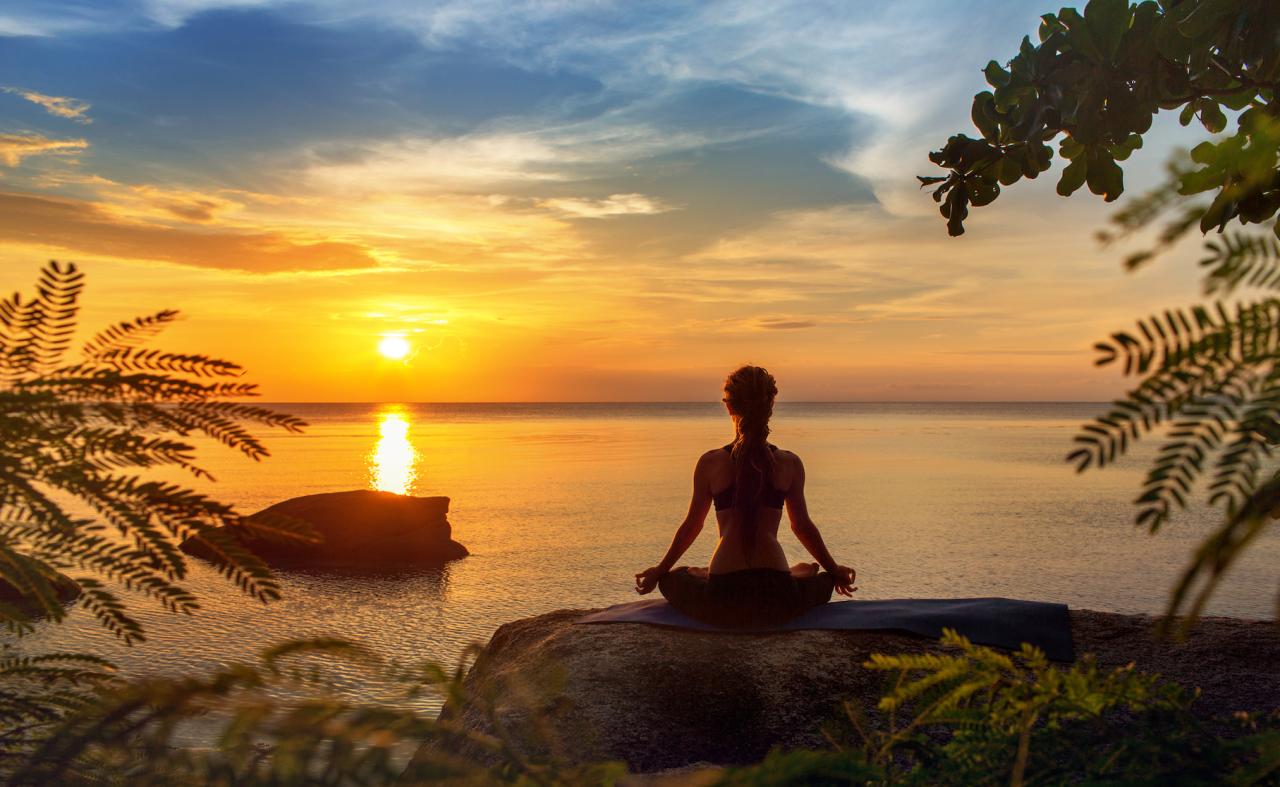
Meditation, within the context of yoga, is a practice aimed at cultivating a state of focused awareness and inner peace. It involves quieting the mind’s chatter and redirecting attention to a specific object, such as the breath, a mantra, or a visual image. This practice is deeply intertwined with the philosophy of yoga, seeking to harmonize the body, mind, and spirit.By integrating meditation into a yoga routine, practitioners can enhance their physical postures, develop mental clarity, and foster emotional well-being.
The benefits extend beyond the mat, influencing daily life by promoting calmness, reducing stress, and increasing self-awareness. Mindfulness, a cornerstone of both yoga and meditation, cultivates the ability to observe thoughts and feelings without judgment. This awareness, in turn, fosters emotional regulation and reduces reactivity to external stimuli.
Fundamental Principles of Mindfulness in Yoga and Meditation
Mindfulness, a central concept in yoga and meditation, emphasizes the present moment. It involves observing thoughts, sensations, and emotions without judgment. This non-judgmental awareness allows for a deeper understanding of one’s inner world, leading to greater emotional regulation and stress reduction. The ability to be fully present in the experience of the now is paramount in both practices, and it fosters a greater sense of calm and connection to the self.
Different Types of Meditation Suitable for Yoga
Various meditation techniques can be seamlessly integrated into a yoga practice. These approaches offer diverse pathways to inner peace and self-discovery, each catering to different needs and preferences. They can be approached independently, or woven together to suit an individual’s specific needs.
Comparison of Meditation Techniques in Yoga
| Meditation Type | Description | Benefits | Yoga Integration |
|---|---|---|---|
| Mindful Breathing | Focuses on the sensation of the breath entering and leaving the body. This can be done with the awareness of the air moving in and out of the nostrils, the rise and fall of the chest, or the expansion and contraction of the abdomen. | Reduces stress, promotes relaxation, and enhances present moment awareness. It can also improve focus and concentration. | Can be incorporated during any yoga posture (asana) or in periods of rest and relaxation, helping to ground the practitioner. |
| Focused Attention | Involves directing attention to a specific object, such as a mantra, a visual image, or a physical sensation. | Improves concentration, cultivates focus, and can promote a sense of stability and clarity. | Can be particularly useful during challenging asanas, as it can help to maintain stability and balance, or in savasana (corpse pose) to foster a deeper sense of peace. |
| Loving-Kindness | Involves cultivating feelings of compassion, kindness, and loving-regard towards oneself and others. This can involve repeating phrases of loving-kindness towards oneself and others, or simply visualizing well-being for oneself and others. | Promotes emotional well-being, fosters empathy, and cultivates a sense of connection with others. It can also reduce feelings of isolation and negativity. | Can be practiced at any point during a yoga session or in dedicated meditation sessions, promoting compassion and interconnectedness. |
Preparing for Meditation During Yoga
Preparing for meditation during yoga is crucial for maximizing its benefits. A conducive environment, both physical and mental, sets the stage for a profound and enriching experience. Proper preparation allows for a smoother transition into the meditative state, fostering a deeper connection with the present moment. The following sections detail the key elements of preparation for a successful meditation practice within a yoga session.A well-prepared environment plays a vital role in the effectiveness of meditation.
Physical comfort and mental clarity are essential components of a successful meditation session. A carefully considered approach to preparation ensures that the practice is as productive and enjoyable as possible. This encompasses everything from the physical space to the clothing you wear, facilitating a calm and focused atmosphere.
Creating a Suitable Environment
A quiet and comfortable space is paramount for meditation. Distractions can hinder the ability to focus and enter a meditative state. Therefore, minimizing external noise and visual stimuli is essential. A quiet room, free from interruptions, is ideal. Natural light, if available, can be beneficial, but strong sunlight or harsh shadows should be avoided.
Ambient sounds, like gentle music or nature sounds, can be used in moderation, serving as a calming backdrop.
Preparing the Body and Mind
Prior to meditation, physical preparation is important. A comfortable posture is essential for maintaining focus. Stretching and light movements can help release tension and improve circulation, preparing the body for stillness. Mentally, clearing the mind of racing thoughts is a crucial aspect. Practicing mindfulness exercises, such as focusing on the breath, can help in this process.
Choosing Optimal Postures and Poses
Various postures can be used during meditation within a yoga session. These should be chosen based on individual comfort and physical limitations. The seated position, such as a cross-legged posture or a chair pose, is commonly used. If sitting on the floor, ensure your back is straight and supported to maintain proper alignment. If needed, use a cushion or blanket to elevate the hips for better comfort.
Lying down is also an option, particularly for beginners or those with physical limitations.
Selecting Appropriate Yoga Clothing
Choosing appropriate yoga clothing is crucial for comfort and freedom of movement during meditation. Loose-fitting, breathable fabrics like cotton or linen are recommended. Avoid restrictive clothing that might hinder movement or cause discomfort. The clothing should not distract or create any sensory input that might interfere with the meditative state.
Designing a Personal Meditation Space
Creating a personal meditation space, whether at home or in a yoga studio, can enhance the practice. This space should be dedicated solely to meditation, fostering a sense of calm and tranquility. In a yoga studio, a quiet corner or a designated area can be used. At home, a dedicated room, a corner in a bedroom, or even a specific spot in a living area can be transformed into a tranquil sanctuary.
Decorating with calming elements, like plants or soft lighting, can further enhance the environment. A personal altar with symbolic objects can be helpful for focused reflection.
25 Proven Steps for Meditation During Yoga
Embarking on a journey of mindful movement and profound stillness, this guide offers a structured approach to meditation integrated seamlessly within a yoga practice. Each step is meticulously crafted to cultivate inner peace, enhance focus, and deepen your connection with your body and breath. This comprehensive approach allows you to experience the profound benefits of meditation while enjoying the physical and mental advantages of yoga.These 25 steps are designed to be a progressive path.
Starting with foundational techniques, you’ll gradually build towards more advanced practices, fostering a profound connection between the physical postures and the mental stillness of meditation. The table accompanying each step will guide you through the specific physical postures and breathing techniques, providing a structured framework for your practice.
25 Proven Steps for Guided Meditation Within a Yoga Flow
This structured approach integrates meditation seamlessly into your yoga practice, allowing for a holistic experience. Each step is designed to build upon the previous one, fostering a progressive path toward deeper inner peace and focus.
| Step Number | Description | Physical Posture | Breathing Technique |
|---|---|---|---|
| 1 | Become present, acknowledging your body and surroundings. Notice the sensations without judgment. | Standing or seated, with relaxed posture. | Gentle, conscious breathing, observing the inhale and exhale. |
| 2 | Focus on the natural rhythm of your breath. Feel the expansion and contraction of your chest or abdomen. | Same as step 1. | Deep, conscious breaths, maintaining a steady pace. |
| 3 | Bring awareness to your physical sensations. Notice any tension or discomfort, observing them without reacting. | Same as step 1. | Slow, deliberate breathing, focusing on the sensation of air entering and leaving your body. |
| 4 | Begin a simple body scan, bringing attention to each part of your body from head to toes. | Seated comfortably, or lying down. | Maintain a steady rhythm of breathing, directing your attention to each area of the body. |
| 5 | Incorporate a mindful stretch, holding each pose with awareness of the sensations. | Gentle stretches, such as cat-cow or child’s pose. | Slow, controlled breathing, matching the stretch. |
| 6 | Practice mindful movement, linking breath to each movement with focus. | Vinyasa flow sequences. | Inhale and exhale with each movement, maintaining awareness. |
| … | … | … | … |
| 25 | Rest in Savasana, integrating the learnings of the previous steps, feeling a deep sense of calm and stillness. | Corpse pose (Savasana). | Slow, deep breaths, allowing the body to relax completely. |
Significance of Consistent Practice
Consistent practice is crucial for experiencing the transformative benefits of meditation. It’s not about achieving perfection, but about cultivating a regular practice. Just like physical exercise, consistent meditation builds resilience and mental clarity. Regularity fosters the development of mental discipline and emotional regulation, which are invaluable in navigating daily life. A consistent schedule, even for a few minutes daily, establishes a positive feedback loop that reinforces positive habits and enhances overall well-being.
Integrating Meditation into Yoga Sequences
Integrating meditation seamlessly into your yoga practice enhances its benefits, fostering a deeper connection between body and mind. This integration allows for a more holistic approach to well-being, promoting relaxation, focus, and a greater understanding of your inner self. By weaving meditation into your yoga sequences, you create a richer experience, cultivating mindfulness and presence in each movement.This process involves a careful blending of mindful movement with quiet contemplation, allowing the meditative qualities to permeate your entire practice.
It is not simply about adding a few moments of stillness, but rather about consciously infusing mindfulness into every aspect of the yoga session.
Incorporating Meditation into Sun Salutations
Sun salutations, with their dynamic flow, provide excellent opportunities for incorporating meditative principles. Each movement, from the forward fold to the upward-facing dog, can be imbued with mindful intention. Instead of rushing through the sequence, focus on the breath and the sensation of each posture. Notice the subtle shifts in your body and mind as you move through the sequence.
For instance, during the downward-facing dog, instead of just holding the pose, acknowledge the sensations in your hands, arms, and legs, and the feeling of your breath flowing through your body.
Incorporating Meditation into Standing Poses
Standing poses, often emphasizing balance and stability, lend themselves well to moments of focused meditation. While holding a pose like Warrior II or Triangle, bring your awareness to the sensations in your body, noticing any subtle adjustments you make to maintain balance. Connect your breath to the sensations, allowing the breath to deepen and stabilize your focus. This mindful engagement with the posture transforms the physical practice into a meditative experience.
Incorporating Meditation into Seated Poses
Seated poses, often associated with stillness and contemplation, offer a natural transition into a deeper meditative state. In a seated pose like Easy Pose or Lotus Pose, bring your attention to your breath. Feel the rise and fall of your chest or abdomen. Observe the sensations without judgment. If your mind wanders, gently redirect your focus back to your breath.
These poses create a conducive environment for deep introspection.
Table Mapping Meditation Steps to Yoga Postures
| Yoga Sequence | Meditation Steps | Description |
|---|---|---|
| Sun Salutations | 1. Notice the breath entering and leaving your body with each movement. 2. Acknowledge the sensations in each posture. 3. Observe the subtle shifts in your body and mind. | This approach creates a flowing, mindful experience, grounding each movement in awareness. |
| Standing Poses | 1. Focus on the sensations of balance. 2. Connect your breath to the sensations in your body. 3. Notice subtle adjustments needed to maintain the pose. | By focusing on sensations, standing poses become opportunities for focused awareness and inner stability. |
| Seated Poses | 1. Observe the breath’s rhythm. 2. Notice sensations without judgment. 3. Gently redirect attention to the breath when the mind wanders. | Seated poses provide a space for deeper introspection and connection with the breath. |
Comparison of Meditation Integration Across Yoga Styles
Different yoga styles offer unique opportunities for integrating meditation. Hatha yoga, with its emphasis on holding postures, naturally lends itself to longer periods of focused awareness within each pose. Vinyasa yoga, with its dynamic flow, allows for the integration of mindfulness within the transitions between poses. Yin yoga, known for its long-held stretches, provides a supportive environment for deep relaxation and meditative introspection.
Each style presents a unique avenue for deepening your connection with yourself through meditation.
Common Challenges and Solutions
Embarking on a meditation journey during yoga can be rewarding, but it’s not without its challenges. Understanding these potential obstacles and possessing effective strategies to overcome them are crucial for sustained practice. This section explores common difficulties and offers practical solutions, emphasizing the importance of patience and persistence in navigating this path.Many practitioners find the initial stages of meditation challenging, as the mind naturally seeks stimulation and distraction.
However, with consistent effort and understanding, these hurdles can be transformed into stepping stones towards deeper self-awareness.
Identifying Potential Challenges
Meditation, particularly during yoga, requires focused attention. Common challenges include wandering thoughts, restlessness, discomfort, and difficulty maintaining a calm state of mind. These are normal experiences, and recognizing them is the first step toward overcoming them. Difficulties in maintaining posture during prolonged seated meditation can also lead to physical discomfort and distract from the meditative state.
Practical Solutions for Overcoming Challenges
Addressing these obstacles necessitates practical strategies. Firstly, acknowledge that thoughts are natural and do not judge their presence. Simply observe them without getting carried away by their content. Secondly, establish a consistent meditation schedule, even if it’s just for a few minutes daily. This regularity cultivates a routine that aids in focusing the mind.
Thirdly, utilize various physical postures, like supported seated positions or reclined poses, to alleviate physical discomfort and encourage relaxation. If discomfort persists, adjust the position, using props such as cushions or blankets, to optimize comfort and maintain focus.
Strategies for Maintaining Focus and Awareness
Maintaining focus and awareness during meditation is key to reaping its benefits. A powerful technique involves anchoring the attention on the breath. Notice the sensation of each inhale and exhale, observing the rise and fall of the chest or abdomen. When the mind wanders, gently redirect attention back to the breath. Alternatively, using a mantra or a specific object of focus can help keep the mind engaged and anchored in the present moment.
Approaching Distractions During Meditation
Distractions are inevitable. They might manifest as external sounds, internal chatter, or physical sensations. The crucial approach is not to fight the distractions, but to acknowledge their presence and gently redirect the attention back to the chosen focus, whether it’s the breath, a mantra, or a visualization. This process of gently redirecting attention builds mental discipline and resilience.
Consider practicing mindfulness exercises throughout the day to develop this ability to gently guide the mind back to the present moment.
Importance of Patience and Persistence
Patience and persistence are indispensable components of a successful meditation practice. Meditation is not about achieving perfection immediately. It’s a gradual process of cultivating self-awareness and developing mental discipline. Embrace the journey, acknowledge that progress will be gradual, and celebrate every small step forward. Regular practice, even with occasional lapses in focus, is key to achieving lasting benefits.
Maintaining a Consistent Meditation Practice
Cultivating a consistent meditation practice during yoga is crucial for reaping its numerous benefits. A regular routine fosters deeper integration of mindfulness and cultivates a stronger connection with the present moment. This, in turn, extends beyond the yoga mat, influencing daily life positively. Maintaining this practice requires understanding the challenges and employing strategies to overcome them.Establishing a routine is paramount for consistency.
It is not just about setting aside time; it’s about creating an environment conducive to focused practice. This involves choosing a dedicated space, specific times, and consistent rituals. By creating a framework, the mind learns to associate these moments with a meditative state, making it easier to transition into the practice. Overcoming plateaus is a natural part of the process, and recognizing this allows practitioners to approach setbacks with understanding and renewed dedication.
Establishing a Routine for Meditation
Consistent practice involves establishing a predictable schedule for meditation within your yoga routine. This could be a specific time each day, such as first thing in the morning or just before bedtime. Creating a dedicated space, free from distractions, is equally important. This designated area becomes associated with mindfulness, making it easier to transition into a meditative state.
Consider incorporating rituals, like lighting a candle or playing calming music, to further reinforce the meditative atmosphere.
Overcoming Plateaus in Meditation Progress
Plateaus in meditation progress are common and should not be viewed as setbacks. They often signal a period of adjustment where the mind is consolidating learned techniques. A key to overcoming these plateaus is to maintain patience and understanding. Recognize that progress is not linear and that periods of seeming stagnation are temporary. Adjusting techniques, exploring different meditation styles, or seeking guidance from a qualified instructor can help navigate these phases.
Strategies for Maintaining Motivation
Maintaining motivation in a consistent meditation practice requires understanding different approaches and choosing strategies that resonate personally. Motivation is influenced by factors such as personal goals, perceived benefits, and the overall experience. A range of strategies can be employed to maintain engagement.
| Approach | Description | Effectiveness |
|---|---|---|
| Setting Realistic Goals | Establishing achievable targets for meditation duration and frequency. | High. Starting small and gradually increasing commitment fosters a sense of accomplishment and prevents burnout. |
| Tracking Progress | Maintaining a journal or using apps to document meditation sessions, noting any changes in experience or feelings. | Moderate to High. Visualization of progress reinforces commitment and encourages perseverance. |
| Finding a Meditation Buddy | Sharing the practice with a friend or fellow practitioner to support and motivate each other. | High. Shared accountability and encouragement can significantly improve consistency. |
| Rewarding Progress | Celebrating milestones achieved in meditation practice with small rewards or activities. | Moderate. Positive reinforcement can strengthen motivation and make the practice more enjoyable. |
| Mindfulness in Daily Activities | Practicing mindfulness in everyday tasks, such as eating or walking. | High. Integrating mindfulness into daily life extends the benefits of meditation, fostering a sense of continuous practice. |
Making Meditation a Sustainable Part of Daily Life
Incorporating meditation into daily life is about integrating it into routines and activities rather than treating it as a separate, isolated practice. It’s about cultivating awareness and mindfulness throughout the day. This could involve mindful eating, mindful walking, or incorporating short meditation breaks into work schedules. Finding ways to seamlessly weave meditation into daily routines will make it a sustainable habit.
This approach helps maintain momentum and avoids the common pitfall of treating meditation as a chore. By recognizing meditation as a tool for enhancing well-being, individuals can integrate it into a holistic lifestyle.
Closing Notes
This guide has equipped you with the knowledge and tools to incorporate meditation seamlessly into your yoga practice. By following these 25 proven steps, you’ll experience a profound connection with your inner self, enhancing your overall well-being and transforming your yoga journey. Remember, consistency is key, so continue practicing and reap the abundant rewards of a meditative yoga lifestyle.